
In the wooden pallet manufacturing industry, choosing the right materials is essential for producing durable, stable, and cost-effective packaging solutions. One material that plays an important role in engineered wood products is the chip block. Made from compressed wood chips and suitable binders, chip blocks are commonly used as load-bearing components in wooden pallets. They offer manufacturers an alternative to traditional solid wood blocks while supporting efficient material utilization and consistent production quality.
What Is a Chip Block?
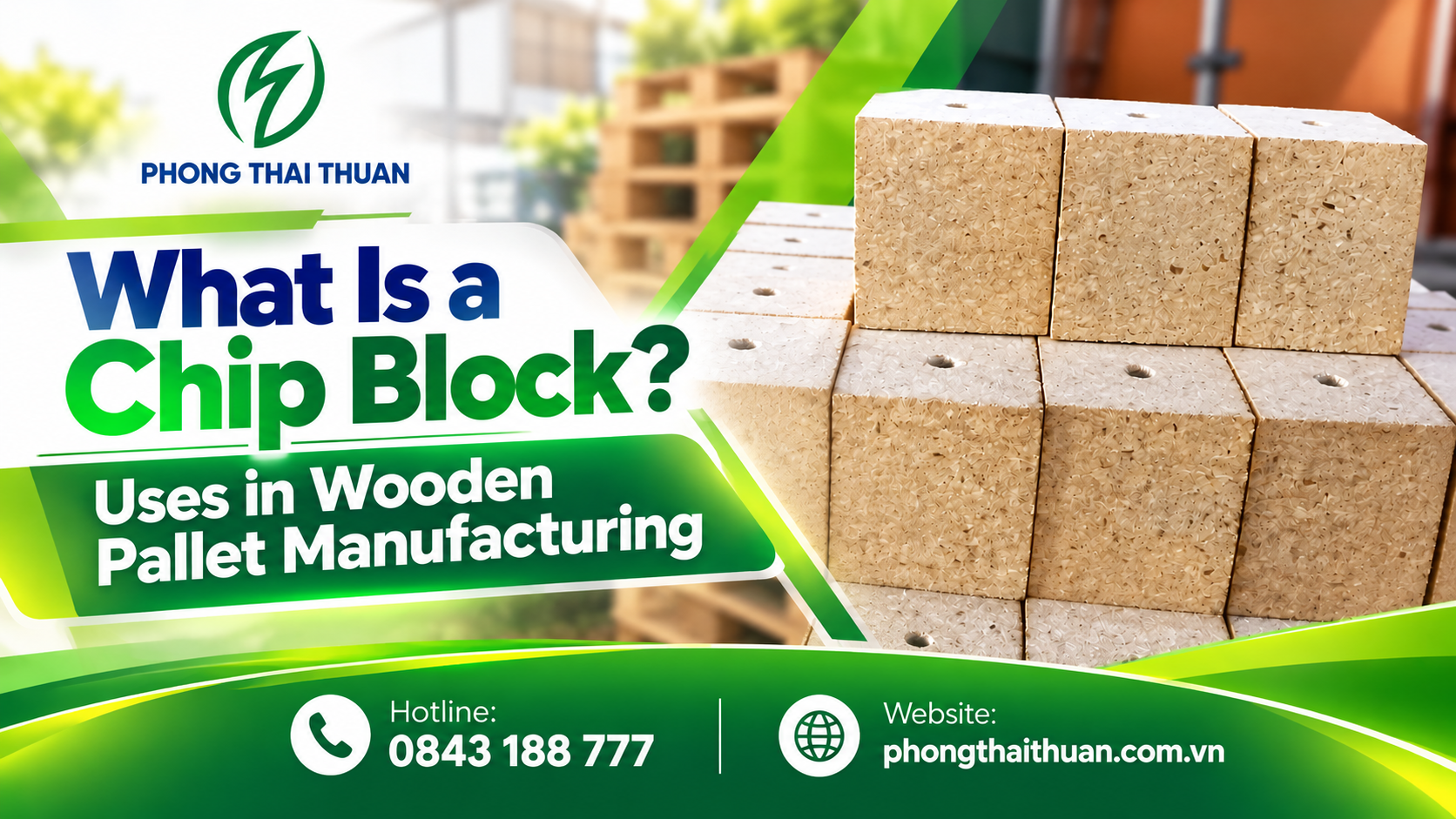
A chip block is an engineered wood component manufactured by compressing wood chips, sawdust, and other suitable wood particles into a solid, uniform shape. Depending on the production process, adhesives or binding agents may be used to help the particles maintain their structure.
Unlike a traditional solid wood block, which is cut directly from timber, a compressed wood chip block is made from processed wood residues. This approach allows manufacturers to utilize wood by-products and produce blocks in standardized dimensions for industrial applications.
In pallet manufacturing, chip blocks are typically installed between the top and bottom deck boards to create support points for pallet loads and forklift or pallet jack handling. Their dimensions, density, moisture resistance, and mechanical performance should be selected according to the intended pallet design and operating conditions.
How Are Chip Blocks Manufactured?
The manufacturing process generally begins with the collection and preparation of wood particles. These materials are processed to achieve a suitable particle size and moisture level before being blended with any required binding agents. The mixture is then placed into molds and compressed under controlled conditions.
After pressing and curing, the blocks are checked for dimensions, surface quality, density, and other relevant specifications. Quality control is important because variations in the production process can affect the strength and consistency of the finished blocks.
>> Look for more: https://phongthaithuan.com.vn/bulk-wood-shavings
Main Uses of Chip Blocks in Wooden Pallet Manufacturing
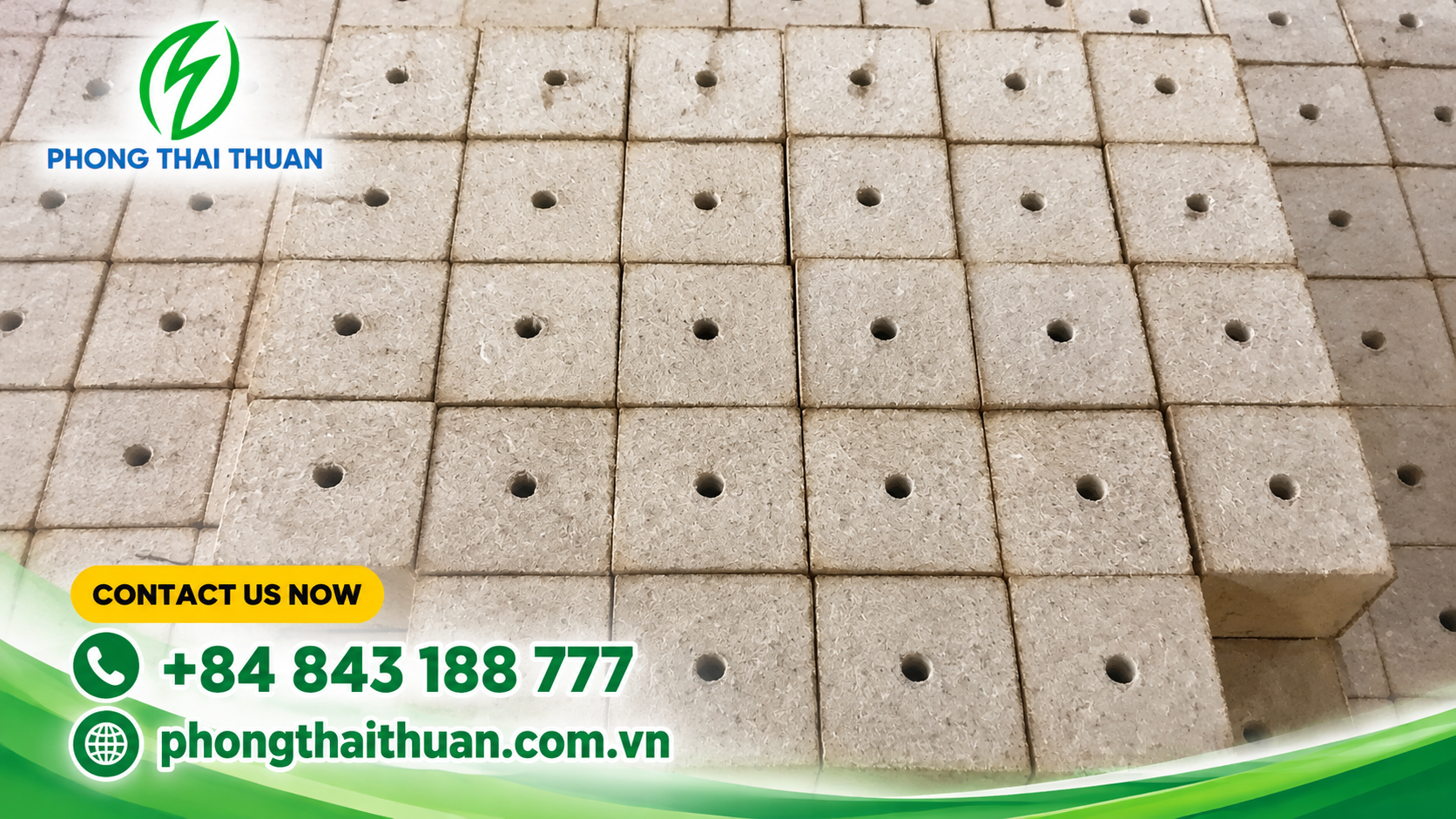
Chip blocks are valued in pallet production because they can be manufactured to consistent dimensions and integrated into different pallet designs. Their main applications include the following.
1. Supporting Pallet Deck Boards
Chip blocks are used as intermediate support components between pallet deck boards and the lower structural members. They help distribute loads through the pallet structure and provide stable contact points when the pallet carries goods.
The block size, spacing, and mechanical properties should be matched to the pallet design, expected load, and handling requirements.
2. Producing Standardized Industrial Pallets
Industrial pallet manufacturers often need components with repeatable dimensions to maintain efficient assembly and consistent product quality. Properly manufactured chip blocks can help simplify production planning and reduce the need to cut individual solid wood blocks for every pallet.
They can be considered for pallets used in warehouses, distribution centers, manufacturing facilities, and logistics operations, provided the blocks meet the technical requirements of the intended application.
3. Supporting Export Pallet Production
Export pallet manufacturers may use engineered wood components to support standardized production and efficient material utilization. However, the suitability of a chip block for export pallets depends on the complete pallet design, destination-market requirements, and applicable shipping regulations.
When pallets are used for international shipments, manufacturers and exporters should verify the applicable requirements, including ISPM 15 where relevant. Compliance depends on the materials and treatment requirements for the complete wood packaging product, not simply on the use of a compressed chip block.
4. Utilizing Wood Residues More Efficiently
One advantage of engineered chip blocks is their ability to use suitable wood particles and residues generated during wood processing. This can help manufacturers make better use of available raw materials and reduce dependence on larger pieces of solid timber.
The actual environmental and cost benefits depend on raw material sourcing, energy consumption, binder selection, production efficiency, and transportation distance.
>> Look for more: https://phongthaithuan.com.vn/sd-01-pine-wood-sawdust-phong-thai-thuan-1
Key Benefits of Chip Blocks for Pallet Manufacturers
Consistent Dimensions and Convenient Assembly
Manufactured to defined specifications, chip blocks can support repeatable pallet assembly. Consistent dimensions help manufacturers maintain component positioning and improve production planning.
Efficient Use of Wood Materials
By using suitable wood particles and processing residues, chip block production can provide another way to utilize wood resources. This may be beneficial for manufacturers seeking to optimize raw material consumption.
Potential Cost and Production Advantages
Depending on local material prices, production methods, and purchasing volume, chip blocks may offer cost advantages compared with certain solid wood alternatives. Buyers should compare the total cost alongside load performance, durability, handling, and expected service life.
How to Choose the Right Chip Blocks for Wooden Pallets
Selecting the right chip block is important for pallet safety, reliability, and manufacturing efficiency. Before placing an order, pallet manufacturers should evaluate the following factors:
- Dimensions: Confirm the required length, width, and height based on the pallet drawing.
- Density and strength: Check whether the block meets the pallet's load-bearing and handling requirements.
- Moisture content: Evaluate moisture specifications and storage conditions to help maintain product stability.
- Surface and structural quality: Inspect for cracks, crumbling, deformation, or other defects that could affect performance.
- Compatibility: Ensure the blocks are suitable for the pallet's fasteners, assembly process, and intended operating environment.
- Supplier consistency: Ask about quality-control procedures, specification tolerances, and the supplier's ability to maintain consistent batches.
A reliable purchasing decision should be based on documented specifications and, where necessary, performance testing rather than price alone.
Frequently Asked Questions About Chip Blocks
Conclusion: Choosing Chip Blocks for Efficient Pallet Manufacturing
Chip blocks are useful engineered wood components for manufacturers seeking standardized pallet parts and more efficient use of wood materials. Their suitability depends on consistent production quality, the required load capacity, and compatibility with the complete pallet design.
By checking specifications carefully and working with a reliable supplier, pallet manufacturers can select chip blocks that support their production requirements and quality objectives.
Contact PHONG THAI THUAN COMPANY LIMITED
Address: 154/31 Nguyen Phuc Chu, Tan Son Ward, Ho Chi Minh City, Vietnam
Hotline: +84 843 188 777
Email: info@phongthaithuan.com.vn
Website: https://phongthaithuan.com.vn
Related Keywords: