
As global industries continue to seek more sustainable energy sources, biomass fuel is becoming an important alternative in the transition toward more responsible energy consumption. Among various biomass products, wood pellets are widely used because of their compact form, convenient handling, and potential application in industrial heating systems.
Vietnam has developed a growing wood processing industry, creating opportunities for the production and export of biomass products. Vietnamese export wood pellets are manufactured from suitable wood materials and processing residues, serving customers in international markets that require reliable biomass fuel sources.
As a company operating in the biomass sector, PHONG THAI THUAN COMPANY LIMITED focuses on biomass products and renewable fuel solutions. This article explores the characteristics of Vietnamese wood pellets, their production process, industrial applications, and important considerations when choosing an export supplier.
What Are Vietnamese Export Wood Pellets?
Wood pellets are a type of solid biomass fuel produced by compressing processed wood materials into small cylindrical pieces. Common raw materials include sawdust, wood shavings, and other suitable residues generated during wood processing.
During production, prepared wood materials are processed into smaller particles, dried to an appropriate moisture level, and compressed under high pressure. The natural lignin in wood helps bind the particles together, forming compact pellets without necessarily requiring additional chemical binders.
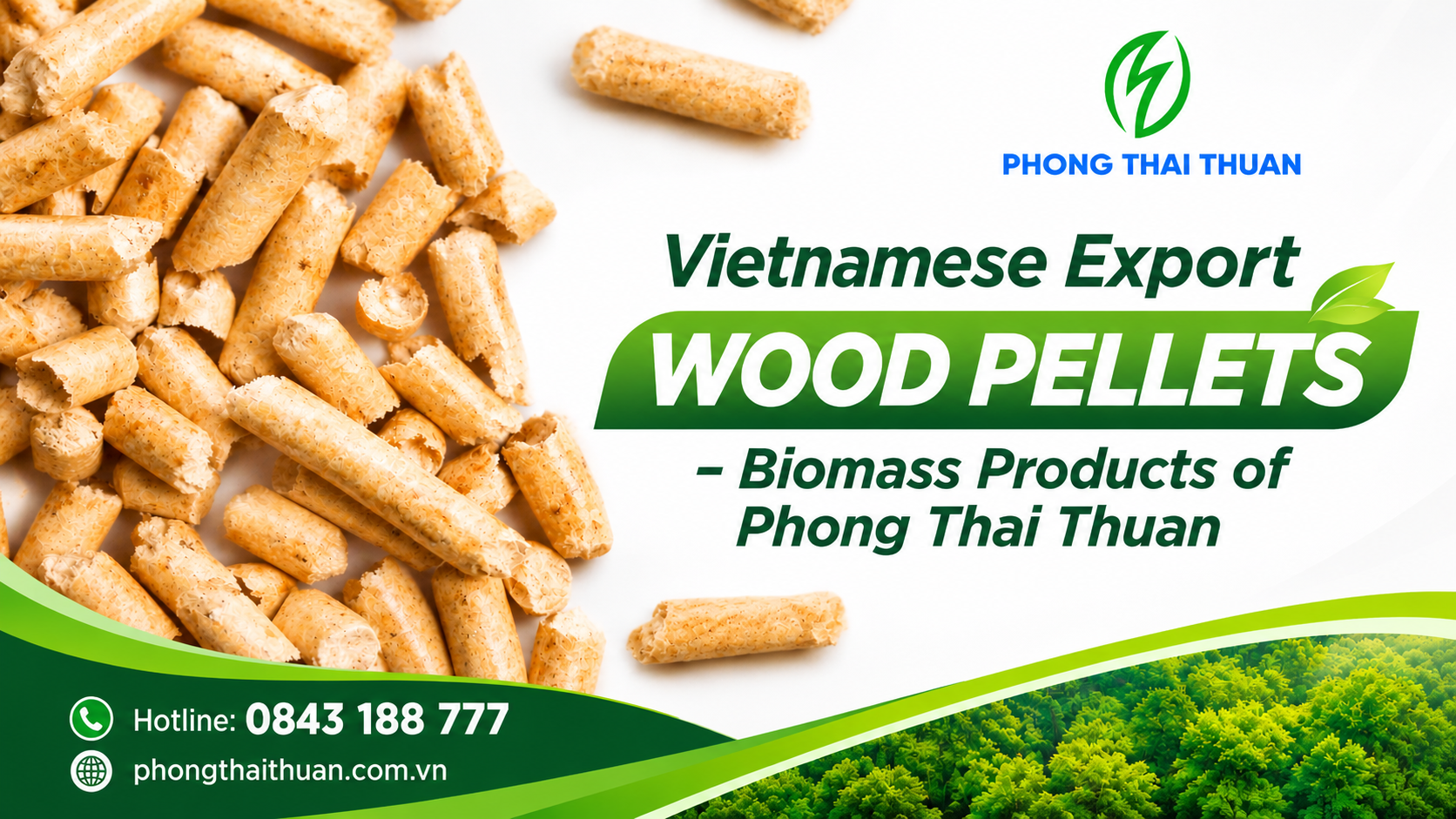
Vietnamese export wood pellets are supplied to international buyers for use in industrial boilers, heating systems, and other biomass energy applications. Their suitability depends on product specifications, raw material quality, manufacturing controls, and the requirements of the destination market.
For buyers looking for a biomass products supplier in Vietnam, understanding the production process and quality characteristics is an important first step before selecting a supplier.
How Are Wood Pellets Manufactured?
Wood pellet manufacturing involves several processing stages. Each stage contributes to the consistency, physical properties, and overall quality of the finished biomass fuel.
Raw Material Selection and Preparation
The production process begins with selecting suitable wood-based raw materials. Depending on the supplier and production requirements, these materials may include sawdust, wood shavings, branches, and other residues from wood processing.
Raw materials are sorted and prepared to remove unsuitable foreign materials. They are then processed through chippers or hammer mills to achieve a more uniform particle size for subsequent production stages.
Drying and Moisture Control
Moisture content is an important factor in wood pellet production. Materials with excessive moisture may affect the compression process and the physical properties of the finished pellets.
Drying equipment is used to reduce moisture to a level suitable for pelletizing. Appropriate moisture control helps support stable production and consistent product quality.
Pelletizing and Compression
After preparation and drying, the wood materials are fed into pelletizing machines. Under pressure, the processed particles pass through die openings and form cylindrical pellets.
The compression process allows the materials to become more compact and easier to store, handle, and transport. The natural binding properties of wood help maintain the shape of the pellets after production.
Cooling, Screening, and Packaging
Freshly produced pellets are generally hot and may require cooling before packaging. Cooling helps stabilize the pellets and prepares them for storage and transportation.
The pellets may then be screened to separate excessive fines and broken pieces. Suitable packaging helps protect the finished products during storage, handling, and international shipping.
Key Quality Parameters of Export Wood Pellets
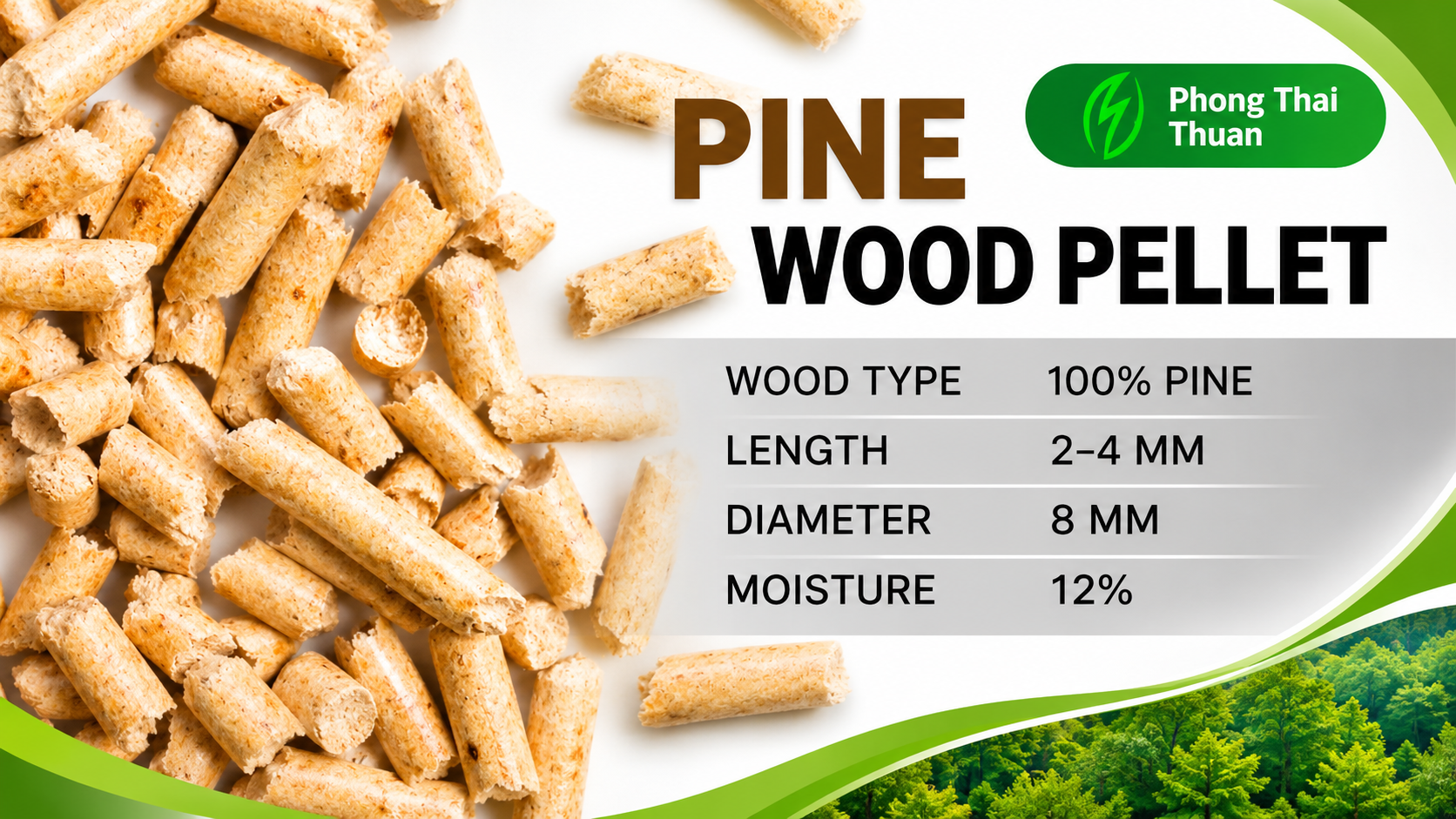
For international buyers, evaluating wood pellet quality involves more than checking the product's appearance. Several technical parameters can influence fuel performance, handling efficiency, and compatibility with industrial equipment.
Calorific Value
Calorific value indicates the amount of energy released when a fuel is burned. It is an important consideration for industrial users because it helps estimate the energy potential of wood pellets and compare different fuel options.
Buyers should review the supplier's product specifications and relevant test results to determine whether the calorific value meets their application requirements.
Moisture Content
Moisture content affects the usable energy of wood pellets and their storage characteristics. Higher moisture levels can reduce the effective energy available during combustion and may increase the risk of quality deterioration under unsuitable storage conditions.
Maintaining appropriate moisture levels is therefore an important part of production quality control and export preparation.
Ash Content
Ash content refers to the inorganic residue remaining after combustion. It is an important parameter for industrial users because ash accumulation may affect cleaning frequency, boiler operation, and maintenance requirements.
The actual ash content depends on the raw materials and manufacturing process. Buyers should confirm the applicable specifications for their equipment and intended use.
Bulk Density and Mechanical Durability
Bulk density describes the mass of pellets contained in a given volume. It is relevant to storage capacity, transportation planning, and material handling.
Mechanical durability indicates how well pellets resist breaking and abrasion during handling. Good durability can help reduce fines generated during loading, unloading, and transportation.
Industrial Applications of Wood Pellets
Wood pellets are used in various energy applications, particularly where businesses require solid biomass fuel for heating and thermal energy generation. Their compact form makes them suitable for organized storage and automated fuel-feeding systems.
Industrial Boilers and Heating Systems
One of the common applications of wood pellets is as fuel for industrial boilers. Depending on the boiler design and operating requirements, pellets can be used to generate heat for manufacturing processes, drying systems, and other industrial operations.
Businesses considering a transition from conventional fuels should evaluate boiler compatibility, fuel feeding systems, combustion performance, and the availability of a stable biomass supply.
Manufacturing and Commercial Heating
Wood pellets can also support heating requirements in selected manufacturing facilities and commercial operations. Their suitability depends on the scale of energy consumption, available combustion equipment, fuel specifications, and local operating conditions.
For businesses with consistent thermal energy demand, evaluating biomass fuel options may help diversify their energy sources and reduce dependence on a single conventional fuel.
Biomass Energy and Resource Utilization
Wood pellets are part of a broader biomass ecosystem that makes use of suitable materials generated from forestry and wood processing activities. Converting these residues into fuel can create additional value from resources that might otherwise have limited applications.
The environmental performance of biomass energy depends on factors such as raw material sourcing, land management, production methods, transportation, and combustion efficiency. Responsible sourcing and lifecycle assessment are important when evaluating sustainability claims.
Explore another biomass solution through Bamboo Biomass from Phong Thai Thuan.
Why Source Wood Pellets from Vietnam?
Vietnam has an established wood processing sector and access to various wood-based raw materials. These conditions create opportunities for manufacturers to develop biomass products for domestic consumption and international markets.
Access to Wood Processing Residues
Wood processing activities generate materials such as sawdust and wood shavings. When these materials are suitable for pellet production, they can be processed into biomass fuel and contribute to more efficient use of available resources.
Opportunities for Export Supply
Vietnamese biomass producers can serve international buyers seeking wood pellets for industrial and energy applications. Export suitability depends on consistent product specifications, production capacity, packaging, logistics, and compliance with destination-market requirements.
A Growing Biomass Product Ecosystem
Beyond wood pellets, the biomass sector includes other products made from suitable agricultural and forestry materials. Diversifying biomass products can create additional opportunities for resource utilization and support the development of renewable fuel supply chains.
How to Choose a Reliable Wood Pellets Supplier in Vietnam
Selecting an export supplier requires careful evaluation of product quality, production capabilities, documentation, and logistics. International buyers should clarify their requirements before requesting quotations or placing orders.
Review Product Specifications
Request detailed information about calorific value, moisture content, ash content, bulk density, pellet dimensions, and mechanical durability. The specifications should match the requirements of the buyer's equipment and intended application.
Check Quality Control and Test Results
A reliable supplier should be able to explain its quality-control procedures and provide relevant product information. Depending on the purchasing requirements, buyers may request laboratory test results, product samples, or inspection arrangements.
Confirm Production Capacity and Supply Consistency
For large-volume purchases, production capacity and supply consistency are important considerations. Buyers should discuss available quantities, production schedules, order requirements, and the supplier's ability to maintain agreed specifications.
Evaluate Packaging and Transportation
Wood pellets must be protected from moisture and unsuitable storage conditions during transportation. Buyers should confirm packaging options, loading arrangements, shipping schedules, and delivery terms before finalizing an order.
Verify Export Documentation and Market Requirements
Export requirements may vary depending on the destination country, product classification, and applicable regulations. Buyers should clarify the required commercial documents, product declarations, inspection records, and any relevant sustainability or quality certifications.
Biomass Products from Phong Thai Thuan
PHONG THAI THUAN COMPANY LIMITED focuses on biomass products and renewable fuel solutions, supporting the utilization of suitable wood-based and agricultural resources.
The company's product portfolio includes biomass-related solutions such as Chip Block and other products made from suitable raw materials. These products serve different applications within the wood processing, packaging, and biomass sectors.
For businesses interested in biomass products, it is important to discuss the intended application, technical specifications, order volume, and delivery requirements directly with the supplier. This helps both parties determine the appropriate product options and purchasing arrangements.
To explore the company's product range, visit the Phong Thai Thuan products page or learn more about its Chip Block product.
Frequently Asked Questions About Vietnamese Export Wood Pellets01
Does switching to biomass fuel require changing the structure of old boilers?
In many cases, existing industrial thermal systems can burn organic inputs with little to no structural modification, provided the feeding mechanism is properly calibrated. Minor adjustments to the air supply and grate system are occasionally necessary to optimize combustion efficiency, but a complete overhaul of the legacy boiler is rarely required for standard applications.
02Is the large-scale supply of biomass raw materials stable?
The supply chain for organic industrial inputs has matured significantly, supported by robust forestry and agricultural processing industries. Established providers maintain substantial reserve inventories and diverse sourcing networks, ensuring a continuous, reliable flow of material to meet the continuous demands of large manufacturing plants throughout the year.
03How much cost savings does using biomass fuel offer compared to coal?
While the exact financial advantage depends on regional market prices and transportation logistics, substituting traditional coal with compressed organic alternatives typically yields noticeable savings on fuel expenditures. Furthermore, businesses benefit indirectly by reducing their carbon tax exposure and lowering equipment maintenance costs associated with corrosive traditional emissions.
The Future of Vietnamese Wood Pellets and Biomass Energy
The development of biomass energy creates opportunities for businesses to make greater use of suitable forestry and wood processing residues. Wood pellets are one of the products supporting this development, offering a compact solid fuel option for industrial heating and energy applications.
Vietnam's wood processing capabilities and access to biomass raw materials provide a foundation for further development in this sector. However, long-term growth depends on responsible sourcing, consistent product quality, efficient manufacturing, and compliance with international market requirements.
For international buyers, choosing a supplier involves more than comparing prices. Product specifications, quality assurance, supply reliability, and transparent communication all contribute to a successful sourcing relationship.
Businesses interested in biomass products from Vietnam can learn more about the quality of Vietnamese export wood pellets and explore the product solutions offered by PHONG THAI THUAN COMPANY LIMITED.
Contact Phong Thai Thuan for Biomass Product Inquiries
Understanding product specifications and supply requirements is an important step when sourcing biomass products for industrial and commercial applications. Buyers are encouraged to discuss their requirements with the supplier to identify suitable solutions.
If your business is interested in biomass products from Vietnam, contact PHONG THAI THUAN COMPANY LIMITED for further information about its products and business cooperation opportunities.
PHONG THAI THUAN COMPANY LIMITED
Address: 154/31 Nguyen Phuc Chu, Tan Son Ward, Ho Chi Minh City, Vietnam
Hotline: +84 843 188 777
Email: info@phongthaithuan.com.vn
Website: phongthaithuan.com.vn
Phong Thai Thuan – Renewable Fuel Solution, For a Green Future!
Related Keywords: