
When exploring the modern landscape of renewable resources and manufacturing inputs, you will frequently encounter industrial wood chips as a foundational material that bridges forestry output with high-demand industrial sectors. To understand how this material supports everything from large-scale panel production to modern power generation, you must first examine what defines it, how it is manufactured, and what criteria determine its commercial value in the global market.
Nature and production process of industrial wood chips

The journey of industrial wood chips begins long before the machinery starts running, rooted deeply in forestry management and sustainable timber harvesting practices. When you look closely at the supply chain, the physical properties and chemical composition of the final product depend heavily on the initial decisions made during harvesting and processing.
Raw wood material input
The primary inputs for industrial wood chips typically include plantation timber such as acacia, eucalyptus, pine, and rubber wood, alongside forestry residues and sawmill byproducts like slabs and edgings. Forest owners and processors select these specific types of wood because of their fiber length, density, and growth cycle. Fast-growing plantation species are particularly favored because they ensure a continuous, legally compliant, and environmentally sustainable supply without depleting natural forests. When you evaluate these raw materials, you will notice that factors like bark content, moisture levels at harvest, and log straightness directly influence the quality grade of the chips that will eventually be produced.
Chipping and wood chip classification
Once the raw timber reaches the processing facility, it undergoes a precise mechanical size-reduction process using heavy-duty industrial chippers equipped with rotating multi-knife discs or drums. This machinery slices the wood perpendicular to the grain, turning whole logs or residual wood pieces into uniform fragments. After chipping, the material passes through vibrating screens and air classifiers to remove oversized pieces, fine sawdust, bark dust, and foreign contaminants. Controlling the knife sharpness, feed rate, and screen mesh size allows manufacturers to deliver a clean, homogeneous product with predictable dimensions, ensuring that downstream users receive material that meets their exact operational specifications.
Practical applications of wood chips in production and energy
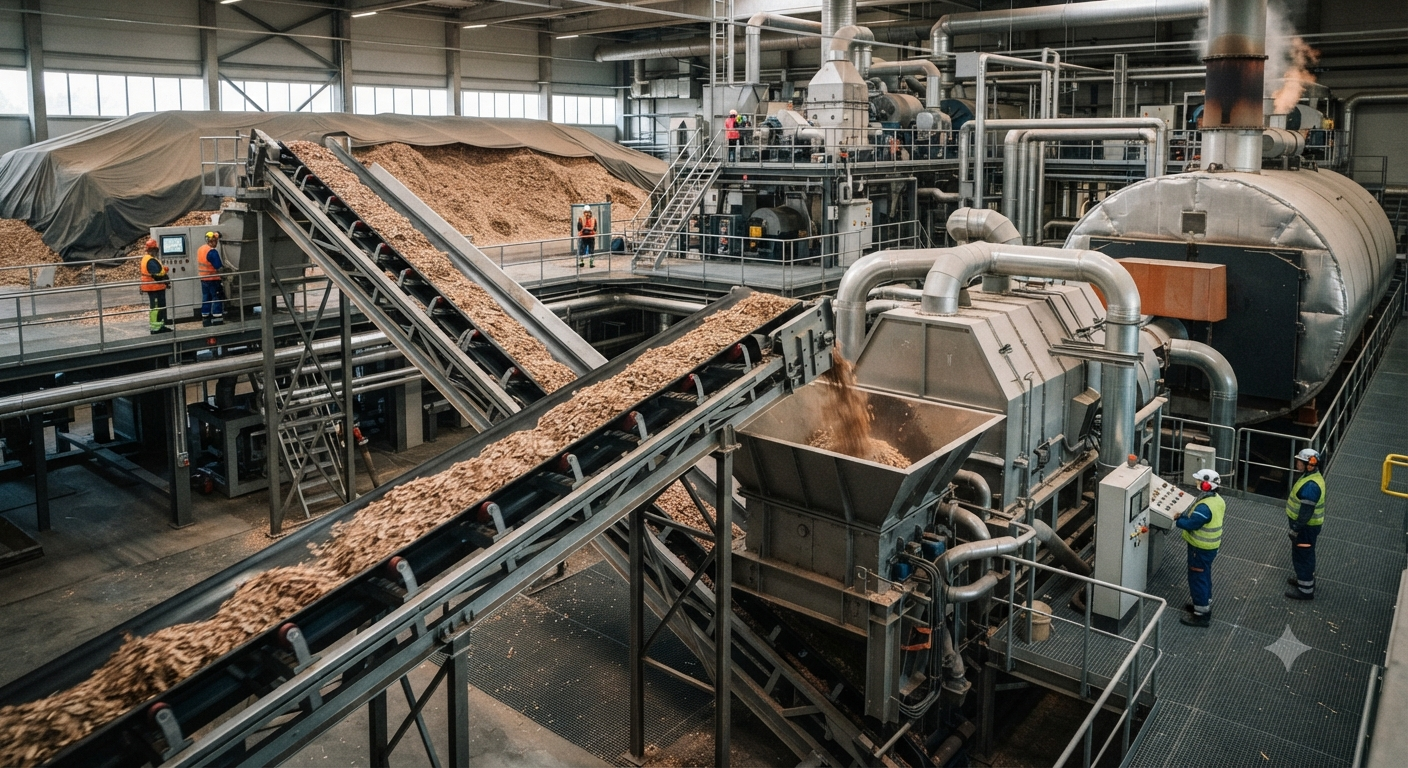
In modern industrial applications, wood chips serve a dual purpose, acting both as a high-grade chemical and structural raw material and as an efficient biomass fuel source. This versatility explains why demand remains consistently high across multiple continents and heavy industries.
Core raw material for particleboard and pulp production
In the manufacturing sector, wood chips represent the primary structural component for producing engineered wood products, medium-density fiberboard (MDF), particleboard, and chemical or mechanical wood pulp. Pulp and paper mills rely on clean chips with minimal bark content to chemical-digest the wood fibers into a slurry, which is subsequently bleached and pressed into paper or cardboard. Similarly, panel manufacturers flake or refine these chips into smaller particles, blend them with synthetic resins, and hot-press them into durable boards used in furniture, construction, and interior design. By utilizing wood chips, these industries achieve high material efficiency while reducing their reliance on solid roundwood timber.
Biomass fuel solution for industrial boilers
Beyond manufacturing, wood chips play an indispensable role in thermal energy generation, particularly as a green industrial boiler fuel. Manufacturing plants, textile mills, food processing facilities, and power plants increasingly substitute fossil fuels like coal and oil with wood biomass to lower carbon emissions and hedge against volatile energy prices. When burned in specialized combustion systems, wood chips release thermal energy that generates high-pressure steam for plant operations and electricity generation. Because modern biomass burners feature automated feeding systems and advanced emission controls, facilities can maintain stable thermal output while complying with stringent environmental regulations.
Factors to consider when selecting and using wood chips
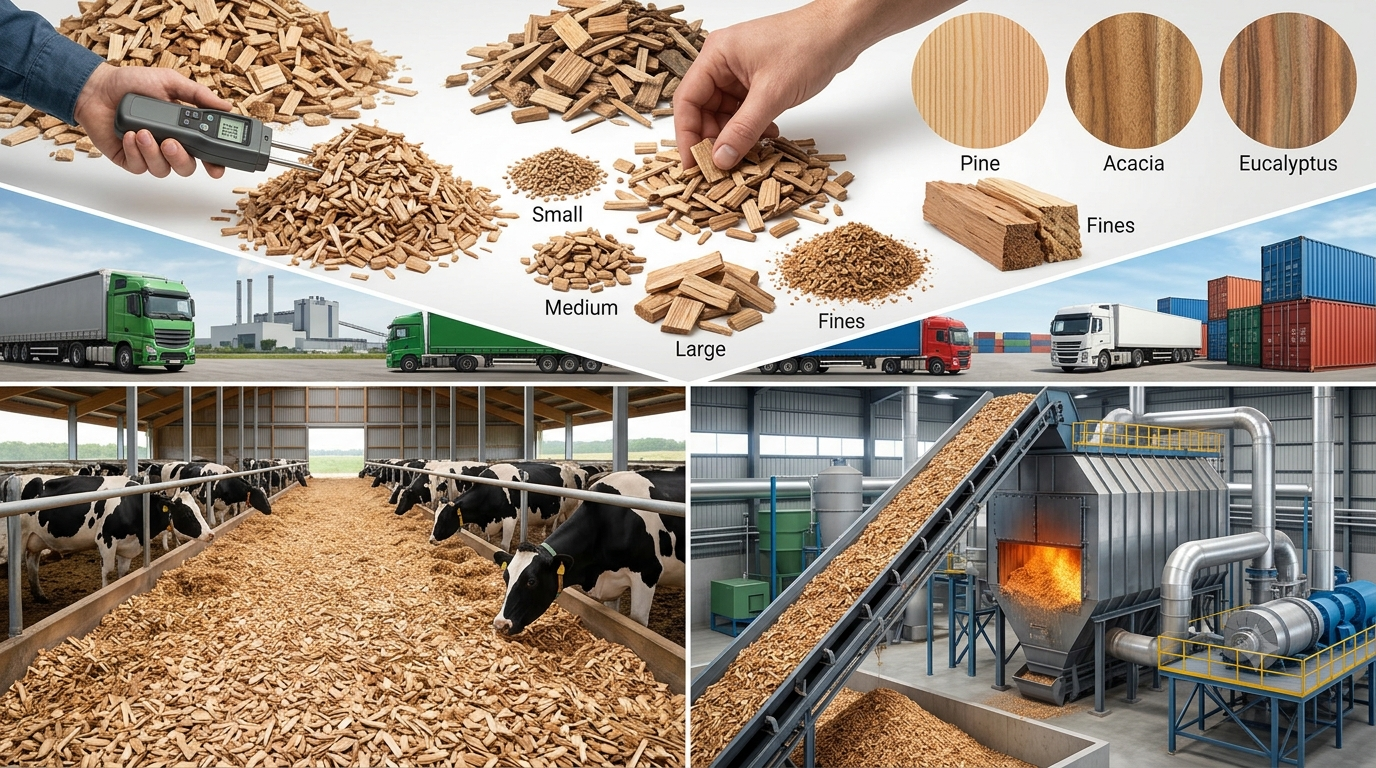
When you prepare to procure or utilize wood chips for your business operations, evaluating specific technical and logistical criteria helps prevent costly operational inefficiencies and equipment damage.
Moisture content and wood chip dimensions
The performance of wood chips depends fundamentally on their moisture content and physical sizing. Freshly harvested wood typically contains high moisture levels that reduce combustion efficiency and require additional energy to evaporate water before heat release can occur. For optimal energy use, operators prefer air-dried or kiln-dried chips, whereas manufacturing plants have specific thickness and length tolerances to prevent jamming in refiners and digesters. Ensuring that your supplier adheres to strict grading standards guarantees that the material will flow smoothly through your handling equipment and perform predictably during processing or combustion.
Supply policies and stable quantities
Operational continuity in manufacturing and energy generation requires an uninterrupted flow of raw materials. When establishing partnerships with suppliers, you must examine their supply chain resilience, storage capacity, and logistical fleet. A dependable supplier should demonstrate the capability to fulfill long-term contracts, manage seasonal supply fluctuations caused by rainy weather, and maintain consistent quality across large shipment volumes. Clear contractual agreements regarding delivery schedules, moisture testing protocols, and pricing mechanisms protect your business from unexpected supply shortages and quality degradations.
Frequently Asked Questions About Industrial Wood Chips
Summary and direction for sustainable raw material use
Industrial wood chips represent a vital intersection between efficient resource utilization and sustainable energy development. By understanding their production processes, balancing moisture and sizing requirements, and securing reliable supply chains, you can effectively integrate this versatile material into your manufacturing or energy generation strategy. As global industries continue to prioritize circular economies and carbon reduction, selecting responsibly sourced biomass raw materials will remain a cornerstone of long-term operational success and environmental stewardship.
Contact information
PHONG THAI THUAN COMPANY LIMITED
Address: 154/31 Nguyễn Phúc Chu, Phường Tân Sơn, TP. Hồ Chí Minh
Hotline: 0843 188 777
Email: info@phongthaithuan.com.vn
Website: phongthaithuan.com.vn